What Is a Flow State?
The term “flow” has long entered everyday language. We talk about “work flow,” about being “in flow,” or about struggling to “find the flow.” Its popularity is more than a linguistic trend - it reflects a recurring experience: in this state, people function and feel differently - simply better.
The term was coined by psychologist Mihaly Csikszentmihalyi, who described flow as a state of complete absorption in an activity - so engaging that time seems to disappear.
Flow is a describable neurophysiological state with measurable effects on well-being, learning capacity, and psychological stability. Stress-related networks are thought to quiet down, while attention- and learning-promoting systems become more active. Self-monitoring takes a backseat, perception becomes focused, and action flows smoothly. Flow is no accident. It can, in principle, be learned - and that is precisely why it has therapeutic relevance.
Applications already exist that build on these insights. In the UK, some programs combine surf therapy with trauma therapy such as EMDR - with retreats in Morocco, where the water is warmer. Research on surf therapy is still young, but early findings are promising (Marshall et al., 2019). Large corporations, too, have long been interested in the flow state - not for humanitarian reasons, but because a regulated nervous system is more efficient.
How to Get Into a Flow State
Getting into flow often takes a while - popular estimates say 15–20 minutes, though research hasn’t pinned down a number. Once there, everything “magically” falls into place: the next move in a game, the next stride in a run, the next motion in dancing with or without a hula hoop. Before this, the brain is preoccupied with control - evaluating, self-correcting, and questioning whether it can “afford” taking a break from constant monitoring.
Flow begins when these processes recede. In short: when letting go becomes possible.
This is the central challenge of flow: it produces effects that feel almost magical, yet it cannot be summoned on demand. The cycle – Struggle → Release → Flow → Recovery - must be experienced anew each time. The more forcefully flow is pursued, the less likely it is to occur.
Some people, through years of practice, enter flow strikingly quickly. Watching an artist seemingly dissolve effortlessly into their craft within seconds is mesmerizing. Yet the underlying rule remains: it takes effort first to appear effortless later.
Technical interventions may also influence how quickly or deeply flow is reached - for example, brain stimulation (such as tDCS) that temporarily dampens prefrontal control areas, reducing self-evaluation and facilitating creative thinking. Yet in everyday life, neither electrically “switched-off” control centers nor endlessly long lunch breaks are practical solutions (or are they?).
The decisive variable remains: the ability to temporarily relinquish control.
Why Flow Belongs in Psychotherapy
Psychotherapy aims to make symptoms understandable, interrupt dysfunctional patterns, and open new behavioral options. Flow-inducing activities - juggling, dancing, making or listening to music, writing, or other creative-physical practices - create somatic spaces in which regulation and self-efficacy can be experienced before they are cognitively reflected upon.
These experiences enhance talk therapy. Flow functions as embodied experience that can later be integrated verbally. In other words: first we experience, then we articulate.
Regularly practiced flow states stabilize therapeutic processes because they have neurobiological effects. Insight alone rarely changes neural networks; repeated experience does.
Flow stands for:
Self-regulation instead of avoidance
Competence in the face of fear instead of fear control
Internalized security instead of constant cognitive oversight
Neuroplasticity through repetition, not analysis alone
Flow is not escapism. Flow is practiced self-regulation.
The Neuroscience of Flow: What Happens in the Brain
Flow is thought to involve several neurochemicals working together. Researchers discuss:
Dopamine: enhances motivation and goal engagement
Norepinephrine: increases focus and responsiveness
Endorphins: reduce pain and promote relaxation
Anandamide: reduces anxiety and may support pattern recognition
Serotonin: stabilizes mood and long-term regulation
The result: reduced rumination alongside increased cognitive flexibility. Catastrophizing loses dominance; problem-solving gains space. Not supernatural - simply functional biology.
Schema-Therapeutic Perspective:
Flow as Cooperation of Inner Parts
From a schema therapy perspective, flow arises where multiple internal systems work constructively together: a sufficiently regulated autonomic nervous system, a curious inner child (in schema therapy: the happy child mode), a limiting but not dominating inner critic (the demanding parent mode), and a present healthy adult.
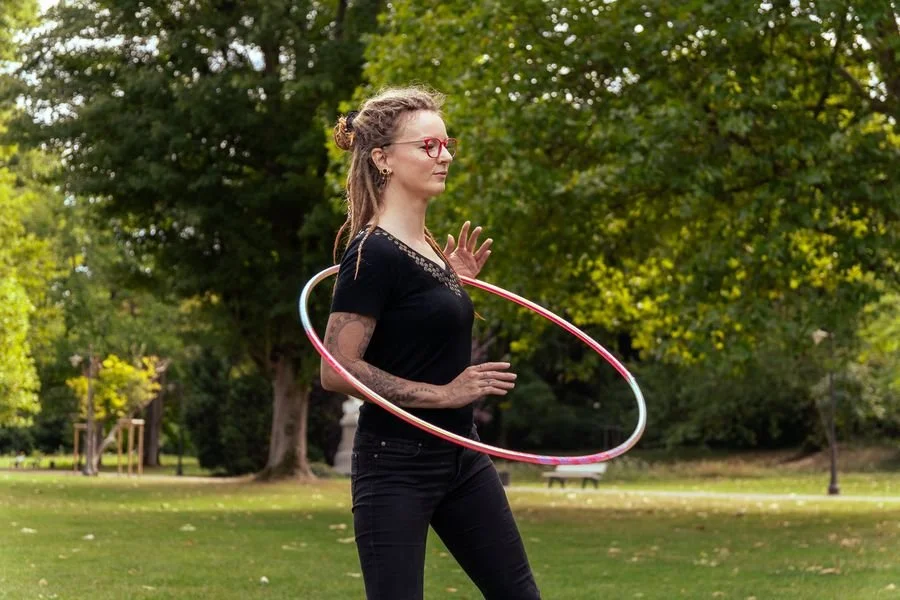
Foto: Metal Health Photography
Flow training supports several layers:
Inner child: joyful exploration despite arousal, risk-taking without punishment
Inner critic: perfectionism becomes functional precision; caution becomes foresight rather than avoidance
Healthy adult: interprets struggle as a normal part of the cycle, deriving realistic actions (sleep, recovery, varied learning, new stimuli)
Autonomic nervous system: regulation through action, not rumination
Instead of overthinking and blocking oneself, curiosity, caution, and the need for safety are integrated into action. The inner critic learns: control does not always protect - sometimes it prevents growth.
Why Flow Makes Us Emotionally Braver
Flow changes how we respond to fear. The nervous system forms new connections: arousal
- racing heart, faster breathing, heightened perception - is no longer automatically interpreted as danger, but as what it truly is: energy available for action.
The heart can pound, yet running, dancing, or performing continues. Control shifts from purely cognitive monitoring (“I must avoid my heart racing”) to immediate bodily experience (“a racing heart does not automatically mean danger”).
What once seemed impossible - stitching, juggling, dancing or baking without overthinking, riding a wave, or spinning a hoop in front of an audience - becomes achievable through practice both in and outside of flow. Even everyday challenges, like waiting in line or speaking in public, become easier - as a natural byproduct of repeated, regulated experience.
The nervous system repurposes itself: fear-based pathways lose dominance, while functional networks take over. Activation no longer automatically triggers flight or panic, but can be consciously managed and used for effective action.
The Cycle:
Struggle → Release → Flow → Recovery → Repeat
Flow contradicts the widespread performance narrative that constant effort produces improvement. Paradoxically, it enhances competence more sustainably than pressure or constant self-optimization ever could.
Struggle is part of the cycle.
Flow comes and goes.
Escaping only into pleasurable states (“bliss junkism”) undermines the process. Flow is training
- and training involves friction. It is not perfection that produces flow. Permission does.
Joy as a Mechanism
Joy is neurobiologically functional. It makes sense! The brain tends to learn better in states of safety and positive arousal than under pressure.
Joy helps stabilize new patterns
Joy weakens the grip of fear-based networks
Joy supports learning
Joy is not a reward after work – it is the engine that makes work possible.
Conclusion: Flow as the Practice of Letting Go
Flow expands psychotherapy in ways words alone cannot. It is not constant, but cultivable. Not magical (or is it?), but systemic. Not escapist, but developmentally enriching.
Many invest enormous energy in trying to improve. Flow reminds us of an often uncomfortable truth: improvement often comes through practicing letting go, more than through more control.
The balance we seek is built from within - through playful yet disciplined practice, through loving repetition, working with our nervous system, not against it.
Want to practice flow yourself? My guides Flow & Glow and Flesh & Flow take you step by step
- playful, science-backed, and made for real life.
And if fear keeps pulling the brakes: that’s what therapy or mental support is for.
Elena Tinkloh (aka Tink) is a licensed psychotherapist in Germany, specializing in cognitive behavioral therapy, and a flow artist since 2014. She works with people on finding their way back into flow.